Close Modal

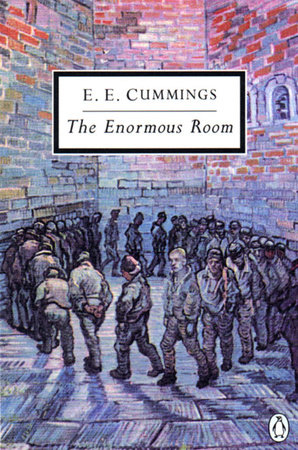
The Enormous Room

Introduction by Samuel Hynes
Look inside
Paperback
$20.00 US
5.08"W x 7.69"H x 0.7"D   | 8 oz | 48 per carton
On sale May 01, 1999 | 304 Pages | 9780141181240

In 1917 young Edward Estlin Cummings went to France as a volunteer with a Red Cross ambulance unit on the western front. But his free-spirited, insubordinate ways soon got him tagged as a possible enemy of La Patrie, and he was summarily tossed into a French concentration camp at La Ferte-Mace in Normandy. Under the vilest conditions, Cummings found fulfillment of his ever elusive quest for freedom. The Enormous Room, his account of his four-month confinement, reads like a latter-day Pilgrim's Progress, a journey into dispossession, to a place among the most debased and deprived of human creatures. Cummings's hopeful tone reflects the essential paradox of his existence: to lose everything is to become free, and so to be saved.

For more than seventy years, Penguin has been the leading publisher of classic literature in the English-speaking world. With more than 1,700 titles, Penguin Classics represents a global bookshelf of the best works throughout history and across genres and disciplines. Readers trust the series to provide authoritative texts enhanced by introductions and notes by distinguished scholars and contemporary authors, as well as up-to-date translations by award-winning translators.
Edward Estlin Cummings was born in Cambridge, Massachusetts, in 1894, the son of a Unitarian minister. Educated at Harvard, in 1917 he moved to Greenwich Village in New York City and began to write poetry and paint. In June of that year he went to France as a Red Cross volunteer with the ambulance corps and was soon arrested and imprisoned, though not charged with a crime, in a French concentration camp. That experience inspired his autobiographical novel, The Enormous Room, which was published in 1922. The next year Tulips and Chimneys, the first of his many volumes of poetry, appeared. It is for his typographically creative poetry that he is best known, but Cummings also painted and wrote expressionist verse drama and prose. Until the 1930s, he preferred the lowercase e.e. cummings. He lived in Paris for a few years after World War I, then returned to New York. He died in 1962 in North Conway, New Hampshire. View titles by e. e. cummings

About

In 1917 young Edward Estlin Cummings went to France as a volunteer with a Red Cross ambulance unit on the western front. But his free-spirited, insubordinate ways soon got him tagged as a possible enemy of La Patrie, and he was summarily tossed into a French concentration camp at La Ferte-Mace in Normandy. Under the vilest conditions, Cummings found fulfillment of his ever elusive quest for freedom. The Enormous Room, his account of his four-month confinement, reads like a latter-day Pilgrim's Progress, a journey into dispossession, to a place among the most debased and deprived of human creatures. Cummings's hopeful tone reflects the essential paradox of his existence: to lose everything is to become free, and so to be saved.

For more than seventy years, Penguin has been the leading publisher of classic literature in the English-speaking world. With more than 1,700 titles, Penguin Classics represents a global bookshelf of the best works throughout history and across genres and disciplines. Readers trust the series to provide authoritative texts enhanced by introductions and notes by distinguished scholars and contemporary authors, as well as up-to-date translations by award-winning translators.
Author

Edward Estlin Cummings was born in Cambridge, Massachusetts, in 1894, the son of a Unitarian minister. Educated at Harvard, in 1917 he moved to Greenwich Village in New York City and began to write poetry and paint. In June of that year he went to France as a Red Cross volunteer with the ambulance corps and was soon arrested and imprisoned, though not charged with a crime, in a French concentration camp. That experience inspired his autobiographical novel, The Enormous Room, which was published in 1922. The next year Tulips and Chimneys, the first of his many volumes of poetry, appeared. It is for his typographically creative poetry that he is best known, but Cummings also painted and wrote expressionist verse drama and prose. Until the 1930s, he preferred the lowercase e.e. cummings. He lived in Paris for a few years after World War I, then returned to New York. He died in 1962 in North Conway, New Hampshire. View titles by e. e. cummings
Live Inspired with Compendium: Now Available from PRH!

Exciting news! Compendium has joined the Penguin Random House family, bringing a proven line of bestselling, sentiment-driven gifts to our extensive and ever-growing catalog. Since 1985, Compendium has been creating meaningful moments with beautiful, thoughtfully made gifts that center connection and celebrate occasions both big and small. From greeting cards to inspirational books to impulse-friendly add-ons, Compendium

Read more