Close Modal

The Song of Roland

Author Anonymous
Translated by Dorothy L. Sayers
Look inside
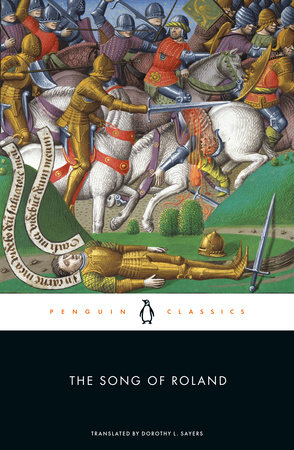
On 15 August 778, Charlemagne’s army was returning from a successful expedition against Saracen Spain when its rearguard was ambushed in a remote Pyrenean pass. Out of this skirmish arose a stirring tale of war, which was recorded in the oldest extant epic poem in French. The Song of Roland, written by an unknown poet, tells of Charlemagne’s warrior nephew, Lord of the Breton Marches, who valiantly leads his men into battle against the Saracens, but dies in the massacre, defiant to the end. In majestic verses, the battle becomes a symbolic struggle between Christianity and paganism, while Roland’s last stand is the ultimate expression of honour and feudal values of twelfth-century France.

For more than seventy years, Penguin has been the leading publisher of classic literature in the English-speaking world. With more than 1,700 titles, Penguin Classics represents a global bookshelf of the best works throughout history and across genres and disciplines. Readers trust the series to provide authoritative texts enhanced by introductions and notes by distinguished scholars and contemporary authors, as well as up-to-date translations by award-winning translators.
The Song of Roland Introduction
A Note on the Translation

The Song of Roland
Notes
Glossary of Unusual Terms
Bibliography
Appendix: La Chanson de Roland
Index of Proper Names
About

On 15 August 778, Charlemagne’s army was returning from a successful expedition against Saracen Spain when its rearguard was ambushed in a remote Pyrenean pass. Out of this skirmish arose a stirring tale of war, which was recorded in the oldest extant epic poem in French. The Song of Roland, written by an unknown poet, tells of Charlemagne’s warrior nephew, Lord of the Breton Marches, who valiantly leads his men into battle against the Saracens, but dies in the massacre, defiant to the end. In majestic verses, the battle becomes a symbolic struggle between Christianity and paganism, while Roland’s last stand is the ultimate expression of honour and feudal values of twelfth-century France.

For more than seventy years, Penguin has been the leading publisher of classic literature in the English-speaking world. With more than 1,700 titles, Penguin Classics represents a global bookshelf of the best works throughout history and across genres and disciplines. Readers trust the series to provide authoritative texts enhanced by introductions and notes by distinguished scholars and contemporary authors, as well as up-to-date translations by award-winning translators.

Author

Table of Contents

The Song of Roland Introduction
A Note on the Translation

The Song of Roland
Notes
Glossary of Unusual Terms
Bibliography
Appendix: La Chanson de Roland
Index of Proper Names

Live Inspired with Compendium: Now Available from PRH!

Exciting news! Compendium has joined the Penguin Random House family, bringing a proven line of bestselling, sentiment-driven gifts to our extensive and ever-growing catalog. Since 1985, Compendium has been creating meaningful moments with beautiful, thoughtfully made gifts that center connection and celebrate occasions both big and small. From greeting cards to inspirational books to impulse-friendly add-ons, Compendium

Read more