

by Jaliza Burwell, Charlesbridge, with Mary Wagley Copp, author of Sometimes We Pray
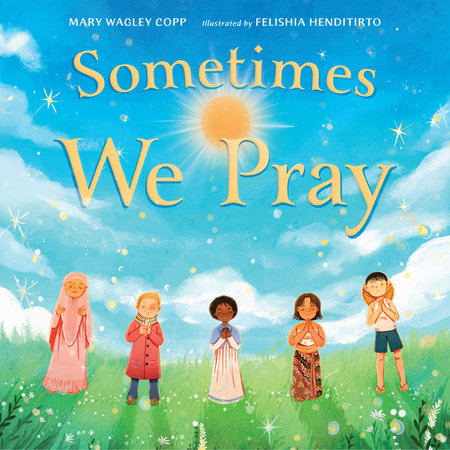
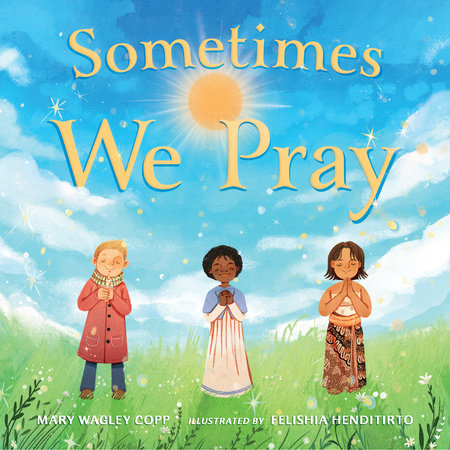
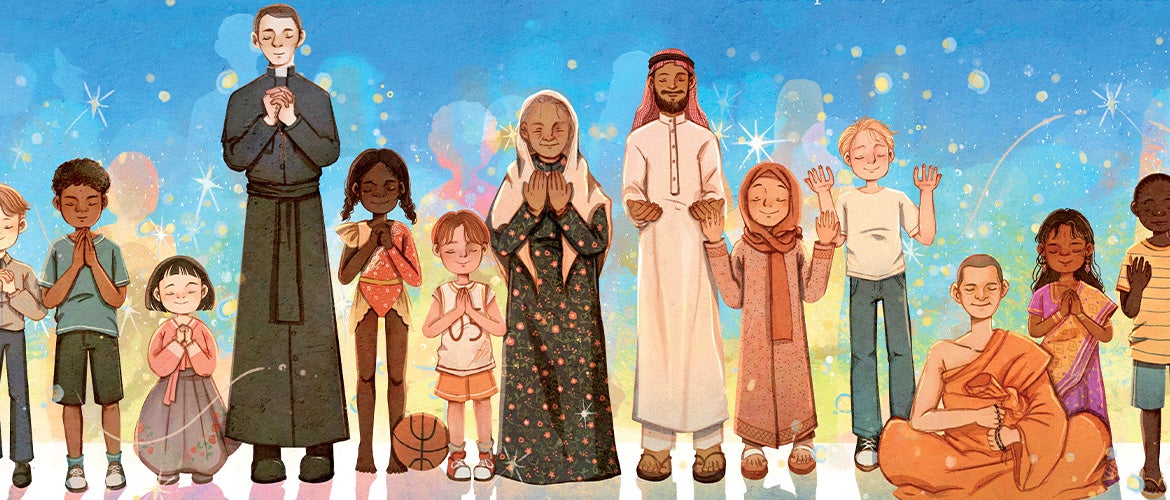
In Sometimes We Pray, author Mary Wagley Copp celebrates the diversity of prayer practices around the world while highlighting the shared human longing for connection, hope, and belonging. Available as both a picture book and a board book, Sometimes We Pray encourages young readers to appreciate spirituality in many forms.
I spoke with Mary about the inspiration behind the book and why this topic feels especially meaningful for children today.
What inspired you to write a book exploring prayer across cultures and beliefs?
As an ELL teacher working with recently resettled newcomers from many countries and cultures, I tried to create space for them to share their stories—their traditions, daily lives, and beliefs—with one another. Those conversations often blossomed into questions about both the differences and the surprising similarities among the cultures in our classroom. I was amazed by the students’ curiosity and generosity of spirit. It was after one particular class—in which two women gathered their prayer rugs and went off to a corner to pray—that I tucked away the idea of writing about prayer for a young audience. It was really my students who inspired me!
Why was it important to welcome both religious and nonreligious readers?
I appreciate the use of the terms religious and nonreligious rather than believers and nonbelievers. After all, we all believe in something. Many people who pray do not consider themselves religious. They may not attend services, belong to a formal faith community, believe in a supreme being, or observe traditional holidays. Yet they still trust in the power of prayer—in reflection, intention, connection, and/or hope. Accepting the value of prayer, within or outside of religion, acknowledges the wide and nuanced ways people make meaning in their lives.
How did you approach representing many cultures respectfully?
I interviewed people from many different backgrounds and faiths with varied ways of praying. I also asked readers to review the manuscript and share their thoughts. I’ve strived to do this with the utmost respect for the faiths represented. Because this is a picture book, I couldn’t explore any one form of prayer in depth. In some ways, that constraint was helpful. It encouraged me to speak simply and spaciously, leaving room rather than filling every corner with explanation. My deepest hope is that Sometimes We Pray is a springboard for conversation, inviting readers to share their own practices, questions, and stories about prayer.
Why does this book feel timely?
Today we have such deep divisions at so many levels: globally, nationally, and within our own communities. And the tone is divisive—often unkind. I believe the earlier we begin to listen, to try to understand, to honor differences and our shared underpinnings, the greater chance we have for more peace in this world.
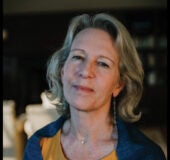
Mary Wagley Copp is the author of Yoshi’s Big Swim and Wherever I Go. She loved exploring the world with her parents and studying Spanish in Guadalajara, Mexico; visiting the symbol of ancient Greece, the Parthenon; and imagining how the Incans built Machu Picchu in Peru. When she is not reading and writing stories, she’s an ELL teacher working with recently resettled newcomers, and she recently traveled to Ethiopia and beyond.