Close Modal

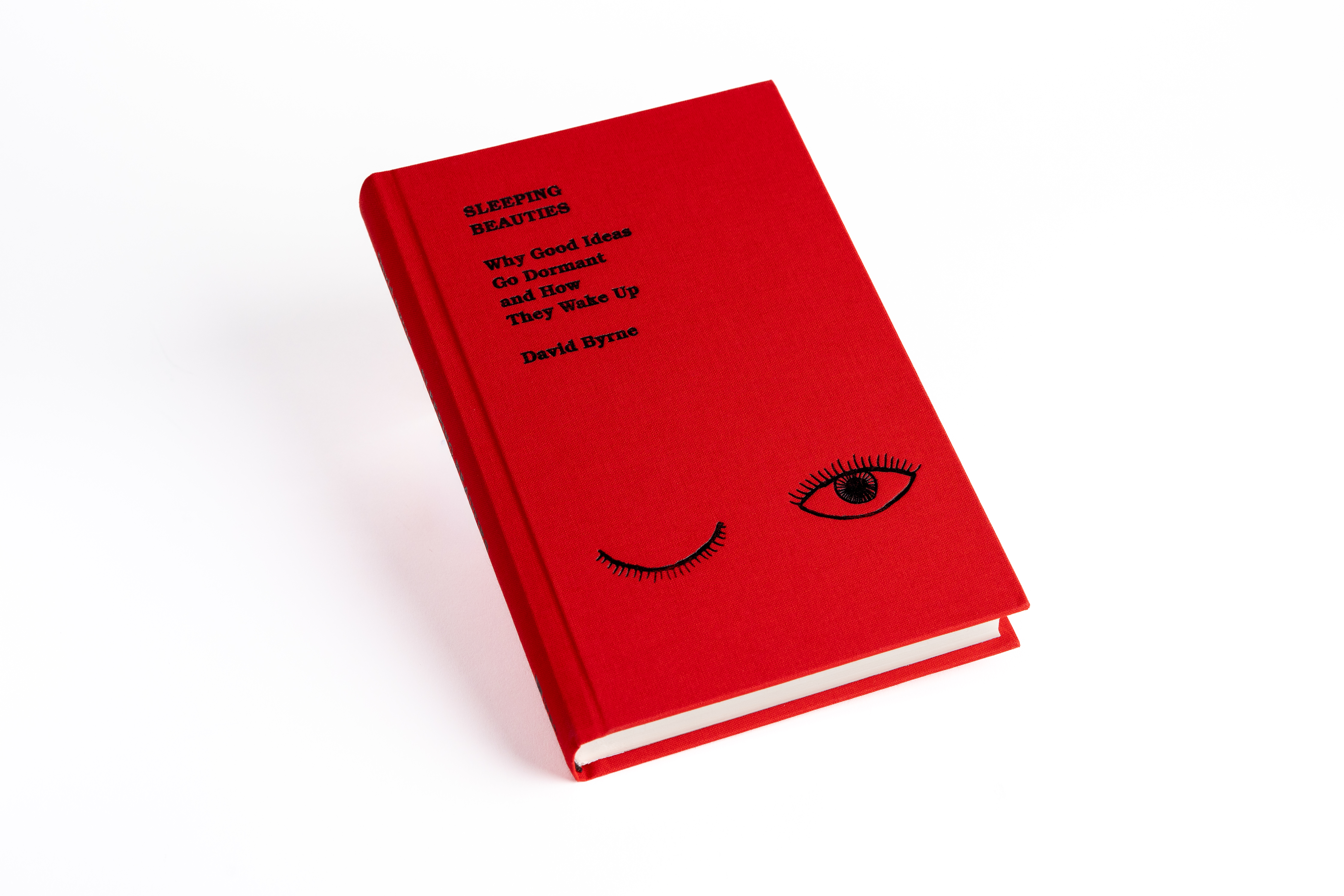
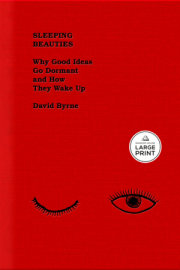
Sleeping Beauties

Why Good Ideas Go Dormant and How They Wake Up

Look inside
Hardcover (Cloth-over-Board, no jacket)
$36.00 US
6.44"W x 9.56"H x 1.25"D   | 23 oz | 12 per carton
On sale Oct 06, 2026 | 400 Pages | 9780593655276

See Additional Formats
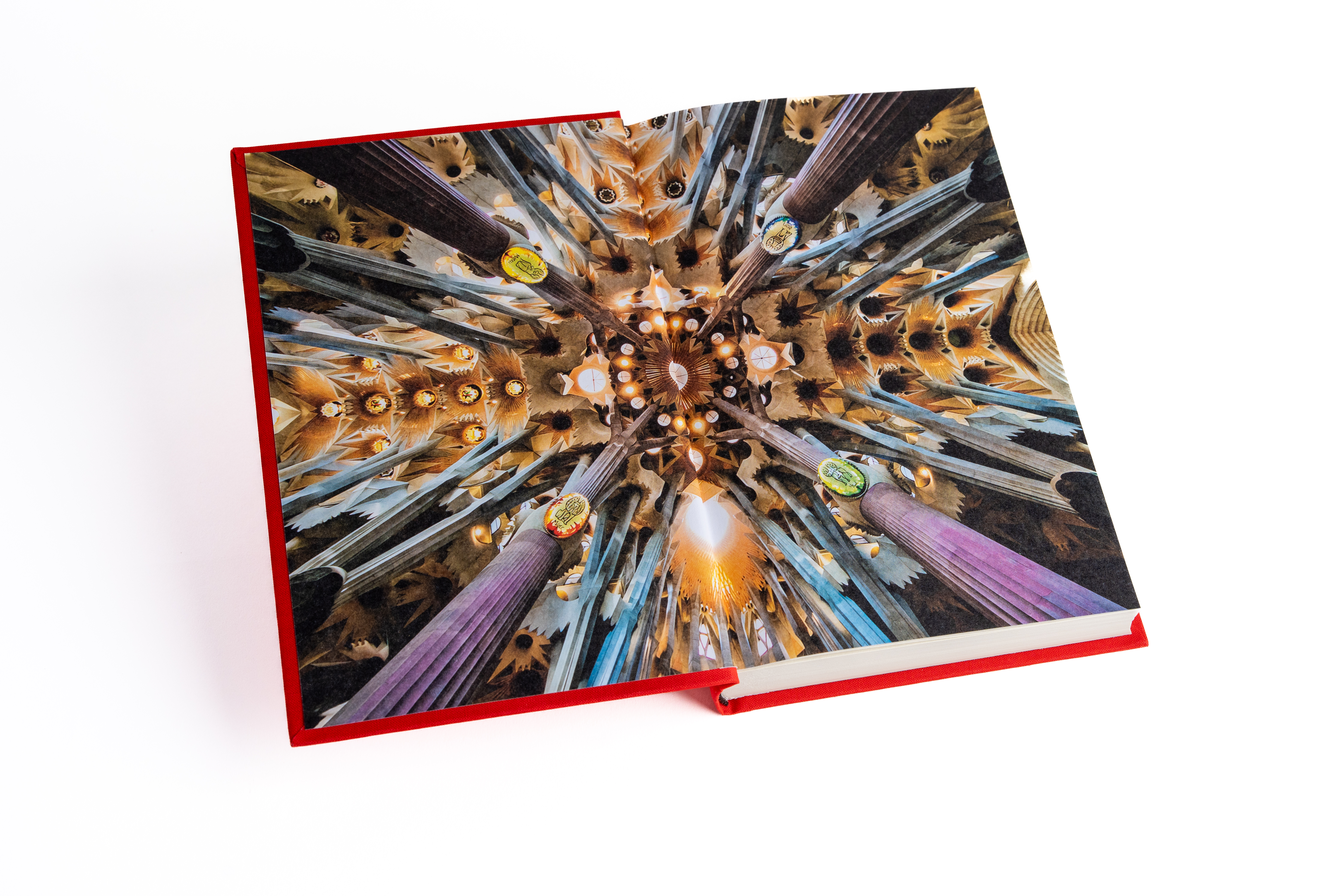
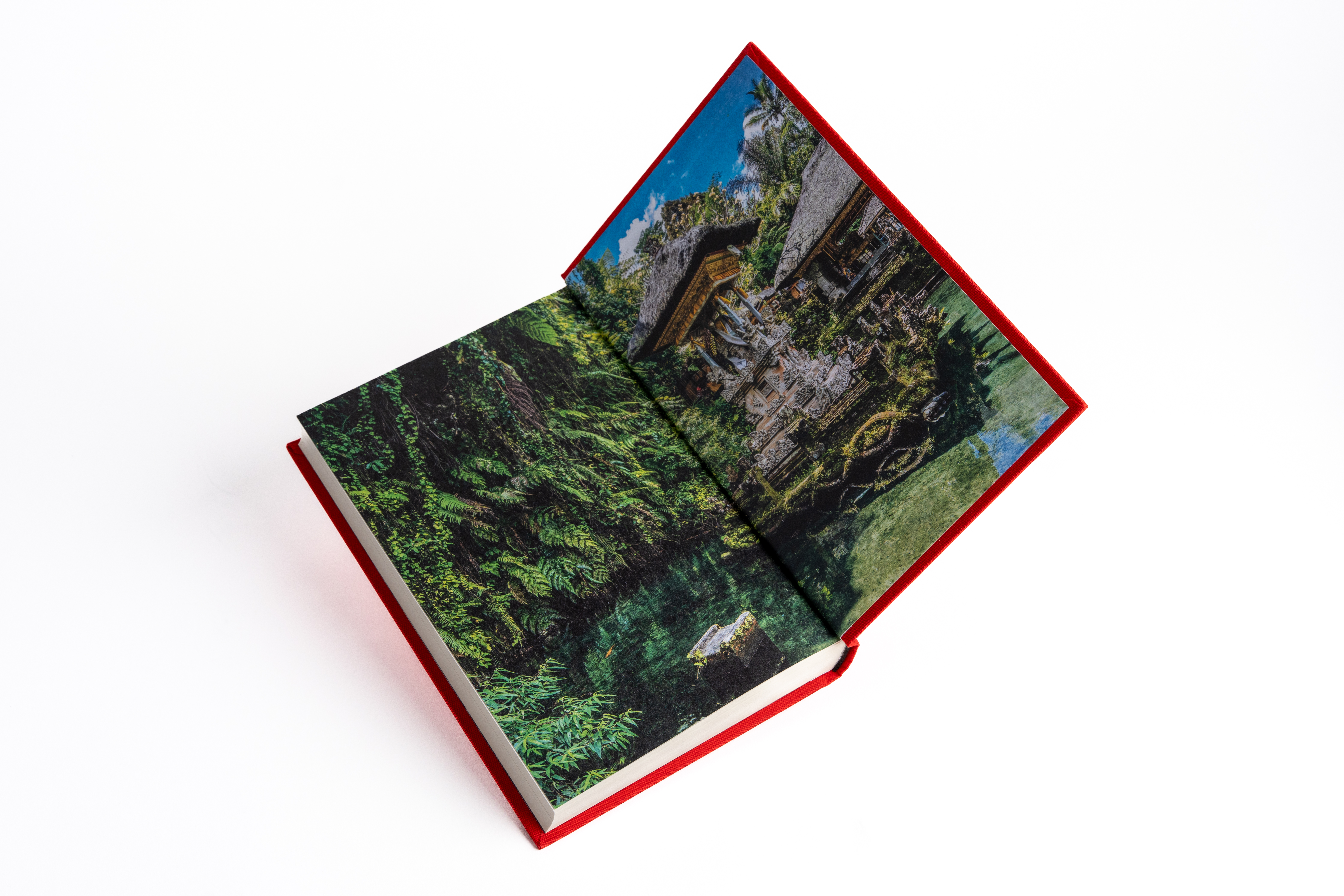
additional book photo
An Instant New York Times Bestseller

"Byrne guides us on a captivating quest to understand how we come to remember forgotten ideas, inventions and technologies . . . Sleeping Beauties belongs on the bookshelf of anyone who cares about creativity or culture." —Adam Grant, The New York Times Book Review

From incomparable creative force David Byrne, a brilliant and inspiring reckoning with how breakthroughs across the arts and sciences get forgotten, and how they get rediscovered


It’s nice to believe in a meritocracy of ideas—genius is always recognized, innovation always seized upon and rewarded. In fact, so many of the people we now acknowledge as the world’s great creators initially got little traction for their work. It faded out, and only later—often much later—did it somehow came roaring back to life.

Discoveries as diverse as dark matter, lichen, and continental drift . . . technologies from solar panels to the steam engine . . . artists from Bach to Bruegel, Vermeer to Melville . . . all, David Byrne shows us, were sleeping beauties. Why did they fall asleep? How did they wake back up? Ranging across centuries and the full scope of human endeavor, Byrne arrives at important conclusions that serve as a lens for bringing to light new seeds for our future breakthroughs.

Sleeping Beauties is a master class in how not to be blind to the next great thing. Several times throughout history, the shock of the new landed like a blow on vested interests and entrenched views, putting innovation on hold. Suppression emerged from pushback, the absence of key supporters, or simply a lack of complementary economic conditions.

But more important even than why ideas go dormant is why they reawaken. Again and again, Byrne shows, someone from a different discipline breaks into the silo. Frequently it’s someone open to metaphorical thinking, to the counterintuitive. Hierarchies and taxonomies have their place, but they can reward insiders and punish outsiders. Oftentimes, it is the winds of change that blow away the sand that has buried momentous ideas.

Sleeping Beauties is humbling but it is also remarkably hopeful. These stories add up to a compass that leads us to the courage to try new things and the wisdom to embrace them. In a time that can seem all too dark, it’s a powerful source of freely available light, delightful in itself and fit for all our human endeavors.
“Byrne guides us on a captivating quest to understand how we come to remember forgotten ideas, inventions and technologies. With striking dexterity and range, he explores how advocates reawakened Bach’s compositions and Vermeer’s paintings after one and two centuries of slumber; how technological advances rekindled theories of continental drift and black holes; how accidents resuscitated hand-washing and genetics; and how war renewed interest in the submarine and The Great Gatsby . . . He is acutely aware that there is no surefire formula for making ideas last or bringing them back to life. What he presents is far more valuable: a deeply researched, stimulating inspection of how the marketplace of ideas shifts, and what steps we can take to shift it. Sleeping Beauties belongs on the bookshelf of anyone who cares about creativity or culture.” —Adam Grant, The New York Times Book Review

“If music doesn’t pan out for Byrne, he has a viable sideline as a pop-history writer—he has a wry, entertaining, and informed voice whether he’s discussing Vermeer’s paintings or water-management systems in ancient India.” —Kirkus

“From Botticelli’s paintings to The Great Gatsby to handwashing, some of humanity’s most important achievements in culture, science, and technology were abandoned and then re-embraced years or sometimes centuries later, explains musician and artist Byrne in this delightful survey of rediscovered art and ideas. . . . It’s a wonderful and humbling celebration of the lost and found.” —Publisher's Weekly
© Shervin Lainez
David Byrne is a musician, performer, writer, and multidisciplinary artist who has captivated audiences since 1975, when he co-founded Talking Heads. Over the course of his career he has released 20 studio albums, scored films — most notably The Last Emperor, for which he received Academy Award, Golden Globe, and Grammy wins — and brought his singular vision to the stage, from the Broadway production American Utopia, which received a Special Tony Award and was adapted into a film directed by Spike Lee, to Here Lies Love, his disco musical that received four Tony Award nominations including Best Original Score, to Theater of the Mind, an immersive theatrical journey co-created with writer Mala Gaonkar. His visual art — including photography and installation works — has been exhibited internationally, and he is the founder of Reasons to Be Cheerful, an online publication devoted to solutions-based journalism. Byrne has published multiple books, including Bicycle Diaries, How Music Works, and Arboretum. View titles by David Byrne
ADVOCATES AND CHAMPIONS
Can One Person Make a Difference?

VERMEER!
191 Years

Sleeping beauties are often awakened by individuals who advocate and champion the work or ideas. Some advocates are professionals who clearly stand to benefit from resurrecting forgotten work in their field. But just because they stand to gain something for themselves doesn’t mean they don’t perform an amazing service.

You’ve probably seen a photo of this painting, Girl with a Pearl Earring. Maybe you’ve seen the real painting. There are posters of it, postcards of it, advertisements that play on it, a novel by Tracy Chevalier with the same title as the painting and a movie adaptation in which Scarlett Johansson plays the girl. The girl in the painting looks like a real person who could be around today; she lives in upstate New York, she has a very popular restaurant. The painter has captured both her and her relationship with us, the viewer: She is looking right at us.

The painting is by Johannes Vermeer, who had some success in his lifetime, but died in 1675 penniless. A little while after that his work fell into obscurity for almost two centuries. This guy! Now he’s one of the most celebrated painters who ever lived. In November 1995, in Washington, DC, people lined up for twelve hours in the cold to view an exhibition of his work. A 2023 show at the Rijksmuseum in Amsterdam sold out its entire run. It’s hard to believe that someone now so revered could have been forgotten.

When Vermeer was alive and working in the mid- 1600s, he was doing pretty well. He was a successful painter around his home city of Delft, well respected by his peers, twice voted to head the local painters guild. His technical knowledge was respected too— he was called as an expert witness when some Italian paintings were thought to be forgeries. He didn’t paint a vast number of paintings: Scholars disagree over the exact number of works that we can attribute to him with certainty, but most counts range from thirty-four to thirty-seven. Still, his work reportedly sold pretty well during his lifetime, and he even had a local patron who bought twenty- one of his paintings, roughly half of everything he ever painted. (For many years, it was thought that this patron was one Pieter van Ruijven, a local bigwig, but more recently, historians discovered that it was actually van Ruijven’s wife, Maria Simonsdr de Knuijt, who took an interest in Vermeer’s work.) Unlike van Gogh, who sold only one painting (as far as we know) in his lifetime, Vermeer did pretty well for much of his life. I will say, I’m a little mystified how anyone who painted mostly small paintings could make a living having painted only a few dozen of them in total. How is that possible? Rembrandt, in contrast, made 137 that we know of— and many of those were quite large.

There’s evidence that the local business community liked him too. In 1667, a poem was published to commemorate the untimely death of a favorite local painter, Carel Fabritius (who studied under Rembrandt and probably influenced Vermeer). The poem concluded by thanking God that a painter had been discovered who could take Fabritius’s place: Vermeer.

But about twenty years after his death in 1675, this beauty was already going to sleep. Right after Vermeer died, a local baker was given paintings from his family to pay off their bread debt—the baker did say he’d give them back if the six-guilder debt were paid, but that wasn’t very likely: The family was broke. At an auction in 1696, his View of Delft went for up to two hundred guilders—though even that is considered low. one paintings were sold at this Amsterdam auction. His decline in popularity continued. In 1881, at another auction, the famous Pearl Earring painting went for two guilders. If you had a time machine, you could have gone back and gotten one of the most famous paintings in the world for almost nothing.

Politics and Misinformation

There doesn’t seem to be a single factor that caused Vermeer to be more or less forgotten but a number of them that all occurred together. The evil fairy in this case was a perfect storm of economics, politics, and plain bad luck. A series of wars in Europe that broke out in the second half of the seventeenth century disrupted the trade and thus the buying power of the successful Dutch merchants.

There was misinformation as well. In this period, art dealers and contemporary historians created a lot of confusion regarding the authenticity of the work of Dutch artists. Arnold Houbraken wrote a guide to Dutch painters that was published from 1718 to 1721, just forty- odd years after Vermeer’s death, called The Great Theater of Netherlandish Painters and Paintresses, in which he omitted Vermeer entirely. Misattributions proliferated— journalist Cynthia Saltzman writes in her book Old Masters, New World that Vermeer’s Girl Reading a Letter at an Open Window was at one point attributed to Rembrandt. Vermeer’s The Music Lesson was attributed to Frans van Mieris, and his The Art of Painting was credited to Pieter de Hooch. Vermeer was by now less well known than these other (many unknown to me) painters in Houbraken’s book, so theirs were therefore considered more valuable—clearly a motivation for the misattribution . . . and there was no one around to dispute it.

Vermeer didn’t help in this matter either— he often didn’t sign his work, and even when he did sign a painting, he didn’t maintain a consistent signature, bad branding on his part, and something guaranteed to create later confusion. And, as often happens even today, once some misattribution or misinformation is published, the printed word is presumed to be true, so little by little Vermeer begins to recede into a chaos of error and mistaken information.

It seems to me that an obvious problem for Vermeer’s legacy was the fact that he didn’t produce that many paintings in his lifetime. You’d think scarcity would therefore increase their value, but it didn’t seem to work that way— in his case it only made them more obscure. There has to be demand for the economic scarcity formula to work, and it seems that now there wasn’t much of that. There were a very few signs of life: It’s reported that the French collector and dealer Jean- Baptiste Pierre Le Brun, who specialized in the work of Northern artists, published a survey in 1792 of important Northern painters in which he included a reproduction of a Vermeer painting, The Astronomer. This was followed by an engraving Le Brun made of the painting Mistress and Maid, which he sold around 1810.

Nowadays we are flooded with images— in print, online, on the street, and on our phones. Access to images, landscapes, and portraits—like the paintings of Vermeer’s day— are now a dime a dozen. But how different it must have been then. If you were nostalgic or moved by a painting, it would have to be located in a public space, or you’d have to physically possess that painting to be able to experience it. Same with portraits— no doubt some were paid for by the sitters themselves, but for later collectors I suspect portraits of folks who would be strangers to them would have mainly symbolic and emotional value— they captured a sense of life, a fleeting moment in time. There was no photography to do that. Imagery then was intimately connected with physical things— paintings (and prints). Engraved copies of well- regarded paintings were not uncommon and were a means of sharing and disseminating a popular image in a very rough sense. But even these were somewhat rarefied—it wasn’t a mass medium.
Introduction
Tom Zee the revenant

Part 1
Advocates and Champions
Vermeer!
Johann Sebastian Bach
Antoni Gaudi
Radio Astronomy
William Faulkner
Beauford Delaney

Part 2
Technological Innovation
The Atom
The Heliocentric solar system
Concrete!!
The hybrid nature of Lichen
Continental Drift
Dark Matter and black holes
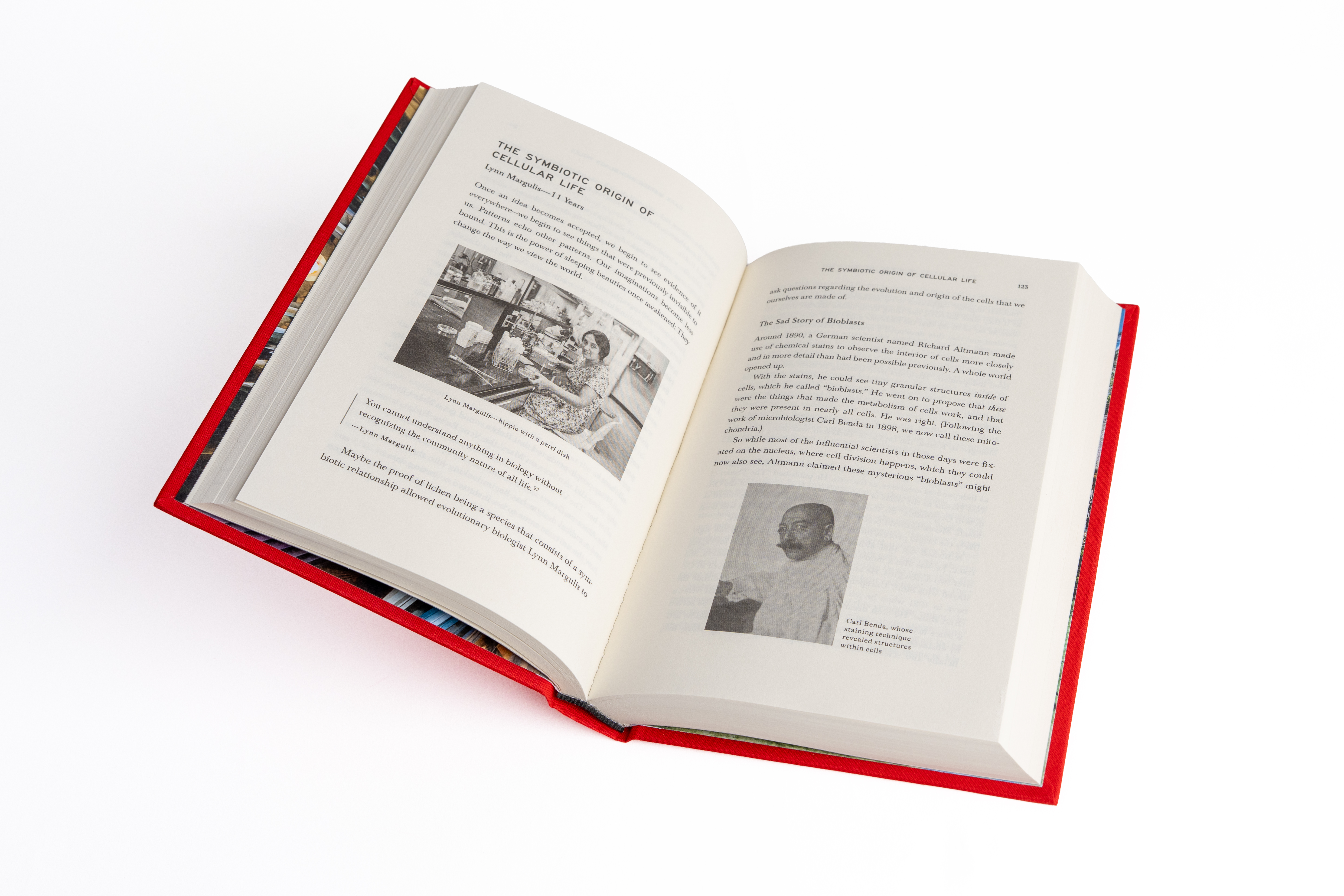
The symbiotic origin of cellular life—Lynn Margulis

Part 3
Accidents
Caspar David Friedrich
Antiseptics and handwashing
Genetics Gregor Mendel
Viroids

Part 4
Economics
Solar Panels

Part 5
Catastrophes
Vincente Lusitano
Water Management in South India
Hyman Minsky
War and conflict as a spur to rediscovery
Inoculation
War makes adoption necessary
The Submarine
Bruegel
The Great Gatsby

Part 6
Cultural Changes
The use of Perspective in art and architecture
Sandro Botticelli
Caravaggio
Goya
Herman Melville—Moby Dick
Kropotkin
Franz Kafka
Janet Sobel

Conclusion
Things We Believe

Photos

additional book photo

About

An Instant New York Times Bestseller

"Byrne guides us on a captivating quest to understand how we come to remember forgotten ideas, inventions and technologies . . . Sleeping Beauties belongs on the bookshelf of anyone who cares about creativity or culture." —Adam Grant, The New York Times Book Review

From incomparable creative force David Byrne, a brilliant and inspiring reckoning with how breakthroughs across the arts and sciences get forgotten, and how they get rediscovered


It’s nice to believe in a meritocracy of ideas—genius is always recognized, innovation always seized upon and rewarded. In fact, so many of the people we now acknowledge as the world’s great creators initially got little traction for their work. It faded out, and only later—often much later—did it somehow came roaring back to life.

Discoveries as diverse as dark matter, lichen, and continental drift . . . technologies from solar panels to the steam engine . . . artists from Bach to Bruegel, Vermeer to Melville . . . all, David Byrne shows us, were sleeping beauties. Why did they fall asleep? How did they wake back up? Ranging across centuries and the full scope of human endeavor, Byrne arrives at important conclusions that serve as a lens for bringing to light new seeds for our future breakthroughs.

Sleeping Beauties is a master class in how not to be blind to the next great thing. Several times throughout history, the shock of the new landed like a blow on vested interests and entrenched views, putting innovation on hold. Suppression emerged from pushback, the absence of key supporters, or simply a lack of complementary economic conditions.

But more important even than why ideas go dormant is why they reawaken. Again and again, Byrne shows, someone from a different discipline breaks into the silo. Frequently it’s someone open to metaphorical thinking, to the counterintuitive. Hierarchies and taxonomies have their place, but they can reward insiders and punish outsiders. Oftentimes, it is the winds of change that blow away the sand that has buried momentous ideas.

Sleeping Beauties is humbling but it is also remarkably hopeful. These stories add up to a compass that leads us to the courage to try new things and the wisdom to embrace them. In a time that can seem all too dark, it’s a powerful source of freely available light, delightful in itself and fit for all our human endeavors.

Praise

“Byrne guides us on a captivating quest to understand how we come to remember forgotten ideas, inventions and technologies. With striking dexterity and range, he explores how advocates reawakened Bach’s compositions and Vermeer’s paintings after one and two centuries of slumber; how technological advances rekindled theories of continental drift and black holes; how accidents resuscitated hand-washing and genetics; and how war renewed interest in the submarine and The Great Gatsby . . . He is acutely aware that there is no surefire formula for making ideas last or bringing them back to life. What he presents is far more valuable: a deeply researched, stimulating inspection of how the marketplace of ideas shifts, and what steps we can take to shift it. Sleeping Beauties belongs on the bookshelf of anyone who cares about creativity or culture.” —Adam Grant, The New York Times Book Review

“If music doesn’t pan out for Byrne, he has a viable sideline as a pop-history writer—he has a wry, entertaining, and informed voice whether he’s discussing Vermeer’s paintings or water-management systems in ancient India.” —Kirkus

“From Botticelli’s paintings to The Great Gatsby to handwashing, some of humanity’s most important achievements in culture, science, and technology were abandoned and then re-embraced years or sometimes centuries later, explains musician and artist Byrne in this delightful survey of rediscovered art and ideas. . . . It’s a wonderful and humbling celebration of the lost and found.” —Publisher's Weekly

Author

© Shervin Lainez
David Byrne is a musician, performer, writer, and multidisciplinary artist who has captivated audiences since 1975, when he co-founded Talking Heads. Over the course of his career he has released 20 studio albums, scored films — most notably The Last Emperor, for which he received Academy Award, Golden Globe, and Grammy wins — and brought his singular vision to the stage, from the Broadway production American Utopia, which received a Special Tony Award and was adapted into a film directed by Spike Lee, to Here Lies Love, his disco musical that received four Tony Award nominations including Best Original Score, to Theater of the Mind, an immersive theatrical journey co-created with writer Mala Gaonkar. His visual art — including photography and installation works — has been exhibited internationally, and he is the founder of Reasons to Be Cheerful, an online publication devoted to solutions-based journalism. Byrne has published multiple books, including Bicycle Diaries, How Music Works, and Arboretum. View titles by David Byrne

Excerpt

ADVOCATES AND CHAMPIONS
Can One Person Make a Difference?

VERMEER!
191 Years

Sleeping beauties are often awakened by individuals who advocate and champion the work or ideas. Some advocates are professionals who clearly stand to benefit from resurrecting forgotten work in their field. But just because they stand to gain something for themselves doesn’t mean they don’t perform an amazing service.

You’ve probably seen a photo of this painting, Girl with a Pearl Earring. Maybe you’ve seen the real painting. There are posters of it, postcards of it, advertisements that play on it, a novel by Tracy Chevalier with the same title as the painting and a movie adaptation in which Scarlett Johansson plays the girl. The girl in the painting looks like a real person who could be around today; she lives in upstate New York, she has a very popular restaurant. The painter has captured both her and her relationship with us, the viewer: She is looking right at us.

The painting is by Johannes Vermeer, who had some success in his lifetime, but died in 1675 penniless. A little while after that his work fell into obscurity for almost two centuries. This guy! Now he’s one of the most celebrated painters who ever lived. In November 1995, in Washington, DC, people lined up for twelve hours in the cold to view an exhibition of his work. A 2023 show at the Rijksmuseum in Amsterdam sold out its entire run. It’s hard to believe that someone now so revered could have been forgotten.

When Vermeer was alive and working in the mid- 1600s, he was doing pretty well. He was a successful painter around his home city of Delft, well respected by his peers, twice voted to head the local painters guild. His technical knowledge was respected too— he was called as an expert witness when some Italian paintings were thought to be forgeries. He didn’t paint a vast number of paintings: Scholars disagree over the exact number of works that we can attribute to him with certainty, but most counts range from thirty-four to thirty-seven. Still, his work reportedly sold pretty well during his lifetime, and he even had a local patron who bought twenty- one of his paintings, roughly half of everything he ever painted. (For many years, it was thought that this patron was one Pieter van Ruijven, a local bigwig, but more recently, historians discovered that it was actually van Ruijven’s wife, Maria Simonsdr de Knuijt, who took an interest in Vermeer’s work.) Unlike van Gogh, who sold only one painting (as far as we know) in his lifetime, Vermeer did pretty well for much of his life. I will say, I’m a little mystified how anyone who painted mostly small paintings could make a living having painted only a few dozen of them in total. How is that possible? Rembrandt, in contrast, made 137 that we know of— and many of those were quite large.

There’s evidence that the local business community liked him too. In 1667, a poem was published to commemorate the untimely death of a favorite local painter, Carel Fabritius (who studied under Rembrandt and probably influenced Vermeer). The poem concluded by thanking God that a painter had been discovered who could take Fabritius’s place: Vermeer.

But about twenty years after his death in 1675, this beauty was already going to sleep. Right after Vermeer died, a local baker was given paintings from his family to pay off their bread debt—the baker did say he’d give them back if the six-guilder debt were paid, but that wasn’t very likely: The family was broke. At an auction in 1696, his View of Delft went for up to two hundred guilders—though even that is considered low. one paintings were sold at this Amsterdam auction. His decline in popularity continued. In 1881, at another auction, the famous Pearl Earring painting went for two guilders. If you had a time machine, you could have gone back and gotten one of the most famous paintings in the world for almost nothing.

Politics and Misinformation

There doesn’t seem to be a single factor that caused Vermeer to be more or less forgotten but a number of them that all occurred together. The evil fairy in this case was a perfect storm of economics, politics, and plain bad luck. A series of wars in Europe that broke out in the second half of the seventeenth century disrupted the trade and thus the buying power of the successful Dutch merchants.

There was misinformation as well. In this period, art dealers and contemporary historians created a lot of confusion regarding the authenticity of the work of Dutch artists. Arnold Houbraken wrote a guide to Dutch painters that was published from 1718 to 1721, just forty- odd years after Vermeer’s death, called The Great Theater of Netherlandish Painters and Paintresses, in which he omitted Vermeer entirely. Misattributions proliferated— journalist Cynthia Saltzman writes in her book Old Masters, New World that Vermeer’s Girl Reading a Letter at an Open Window was at one point attributed to Rembrandt. Vermeer’s The Music Lesson was attributed to Frans van Mieris, and his The Art of Painting was credited to Pieter de Hooch. Vermeer was by now less well known than these other (many unknown to me) painters in Houbraken’s book, so theirs were therefore considered more valuable—clearly a motivation for the misattribution . . . and there was no one around to dispute it.

Vermeer didn’t help in this matter either— he often didn’t sign his work, and even when he did sign a painting, he didn’t maintain a consistent signature, bad branding on his part, and something guaranteed to create later confusion. And, as often happens even today, once some misattribution or misinformation is published, the printed word is presumed to be true, so little by little Vermeer begins to recede into a chaos of error and mistaken information.

It seems to me that an obvious problem for Vermeer’s legacy was the fact that he didn’t produce that many paintings in his lifetime. You’d think scarcity would therefore increase their value, but it didn’t seem to work that way— in his case it only made them more obscure. There has to be demand for the economic scarcity formula to work, and it seems that now there wasn’t much of that. There were a very few signs of life: It’s reported that the French collector and dealer Jean- Baptiste Pierre Le Brun, who specialized in the work of Northern artists, published a survey in 1792 of important Northern painters in which he included a reproduction of a Vermeer painting, The Astronomer. This was followed by an engraving Le Brun made of the painting Mistress and Maid, which he sold around 1810.

Nowadays we are flooded with images— in print, online, on the street, and on our phones. Access to images, landscapes, and portraits—like the paintings of Vermeer’s day— are now a dime a dozen. But how different it must have been then. If you were nostalgic or moved by a painting, it would have to be located in a public space, or you’d have to physically possess that painting to be able to experience it. Same with portraits— no doubt some were paid for by the sitters themselves, but for later collectors I suspect portraits of folks who would be strangers to them would have mainly symbolic and emotional value— they captured a sense of life, a fleeting moment in time. There was no photography to do that. Imagery then was intimately connected with physical things— paintings (and prints). Engraved copies of well- regarded paintings were not uncommon and were a means of sharing and disseminating a popular image in a very rough sense. But even these were somewhat rarefied—it wasn’t a mass medium.

Table of Contents

Introduction
Tom Zee the revenant

Part 1
Advocates and Champions
Vermeer!
Johann Sebastian Bach
Antoni Gaudi
Radio Astronomy
William Faulkner
Beauford Delaney

Part 2
Technological Innovation
The Atom
The Heliocentric solar system
Concrete!!
The hybrid nature of Lichen
Continental Drift
Dark Matter and black holes
The symbiotic origin of cellular life—Lynn Margulis

Part 3
Accidents
Caspar David Friedrich
Antiseptics and handwashing
Genetics Gregor Mendel
Viroids

Part 4
Economics
Solar Panels

Part 5
Catastrophes
Vincente Lusitano
Water Management in South India
Hyman Minsky
War and conflict as a spur to rediscovery
Inoculation
War makes adoption necessary
The Submarine
Bruegel
The Great Gatsby

Part 6
Cultural Changes
The use of Perspective in art and architecture
Sandro Botticelli
Caravaggio
Goya
Herman Melville—Moby Dick
Kropotkin
Franz Kafka
Janet Sobel

Conclusion
Things We Believe

Meet Gifted: Your Guide to the Holidays from PRH Retail

The busiest shopping season of the year is nearly here, and we’ve curated a winter catalog for retailers designed to make planning your holiday assortments that much easier. Gifted: A Winter Collection makes it simple to find what fits. Browse gifts by recipient, price point, or interest with collections inspired by some of the season’s

Read more